
Skytale Map Editor
The tool we built, by hand, to make our games inside Minecraft. Today everything we produce comes out of it, The Last Artifact included.
5 years digging into the same tool
1 min 30 to discover the SME
It was born of a very concrete problem
Minecraft opens doors for creation: command blocks, datapacks, resource packs. Then you want a cinema camera, music that lands on the beat, a voiced character whose lips move, and the whole thing collapses. With one more constraint on our side: players install nothing. No mod. Everything has to run server-side.
So we started at the bottom, with stable, tested libraries that settle once and for all what Minecraft cannot do. Then modules on top. Then interfaces, in game, so that game designers, level designers and writers never have to open a code file again.
That is the Skytale Map Editor: not a list of features bolted onto Minecraft, but a workbench that turns Minecraft into a game editor.
« Al principio se planifica un poco de más, y después se van sorteando los problemas sobre la marcha. »
Ben, developer at Skytale
7 things Minecraft could not do
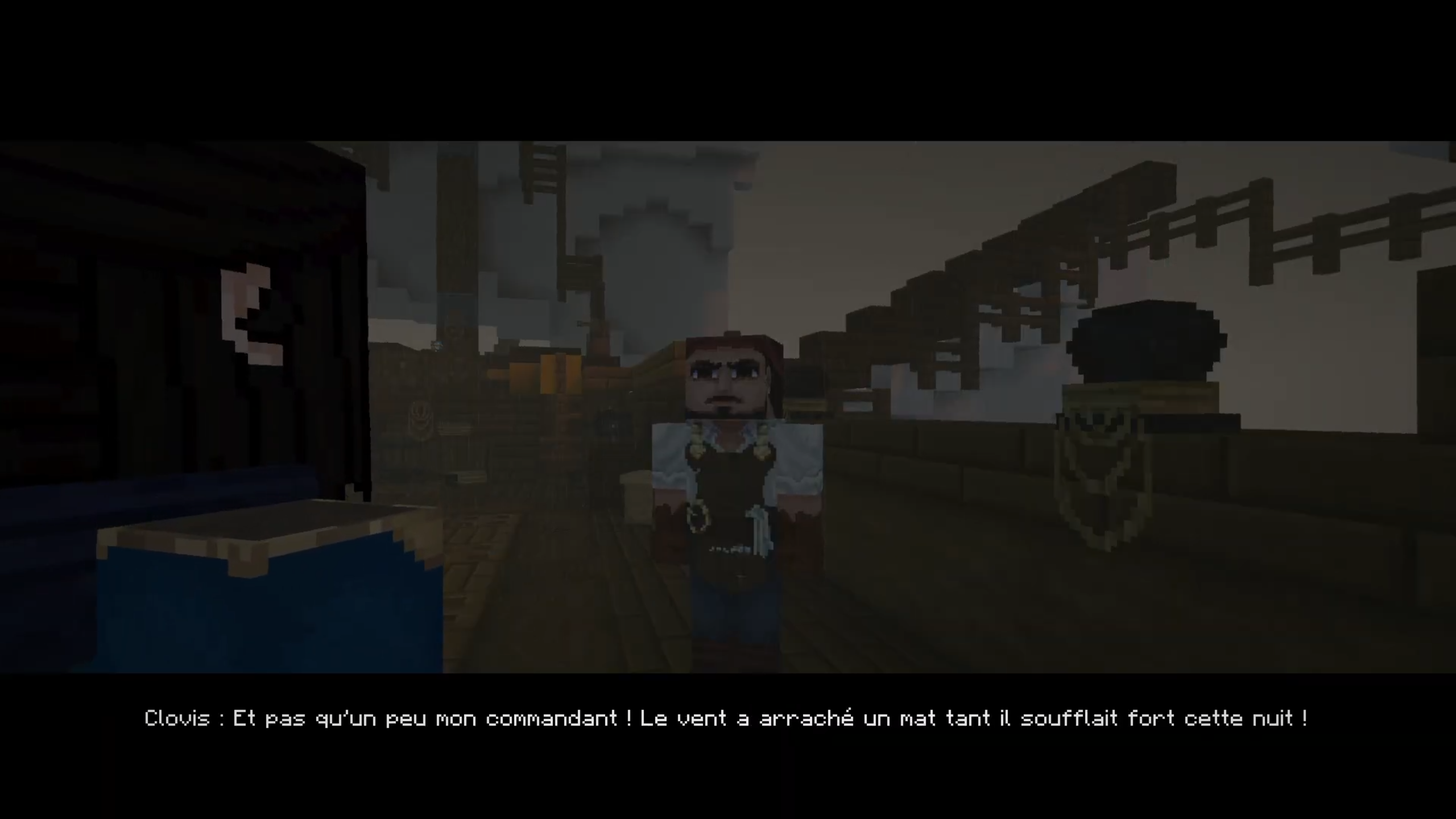
Every video is a clip captured in game, during production. What you see is what the team handles every day.
These 7 clips show only part of the editor: it now holds 29 modules, all listed and explained in the diagram just below.
4 layers feeding each other, from the server up to the game
APIs built by the community let us write our libraries, the libraries let us build the modules, the modules make the games. Click any brick below to see its detail.
5 years of development, in 3 movements
The SME was not coded in a sprint. It was thought through, taken apart, rebuilt, hardened.
The build in time-lapse, 5 years in a few minutes
2021 to 2023, two and a half years
The foundations
The longest phase, and the least spectacular: building the interdependent libraries that generalise the advanced features. That is what gives everything else its resilience.
2023 to 2025, two years
The modules
Each module answers a precise production need. Creating a weapon, for instance, means handling the mechanics, the item, the sound, the effects and the translation in one go.
2025 to 2026, one year
The interfaces
The final wiring, in game and on the web, so the editor can be used without being a developer. The shortest of the three, because all the invisible work was already done.
Built for creators, not for Java developers
The SME is aimed first at game designers, level designers and writers. Here is what a production day with it looks like.
In the game
Everything is set from inside Minecraft
Placing a character, aiming a camera, assigning a sound: the tools look like inventory screens. Familiar from the very first second.
In the browser
A web console for the text
One command, one link, and you edit the dialogue and the project files, then test in game without restarting the server.
As a team
Designed for tight deadlines
Beta testing sits at the heart of the process and the modules are shared: whatever is built for one project serves every project after it.
“A game editor is a tool that makes producing a complete game available to anyone, with no advanced technical skill.”
The definition that has been our compass from the start
The volunteers behind the tool
Skytale's development division: 12 people writing the editor in their spare time, alongside the game designers and artists who use it every day.
Meet the whole Skytale team
The editor will be released as open source
When The Last Artifact is released, the SME code will be opened. Until then we welcome Java developers, map makers and occasional contributors.